
Produced by Chessy Rayner. Photographs by Fernando Bengoechea.
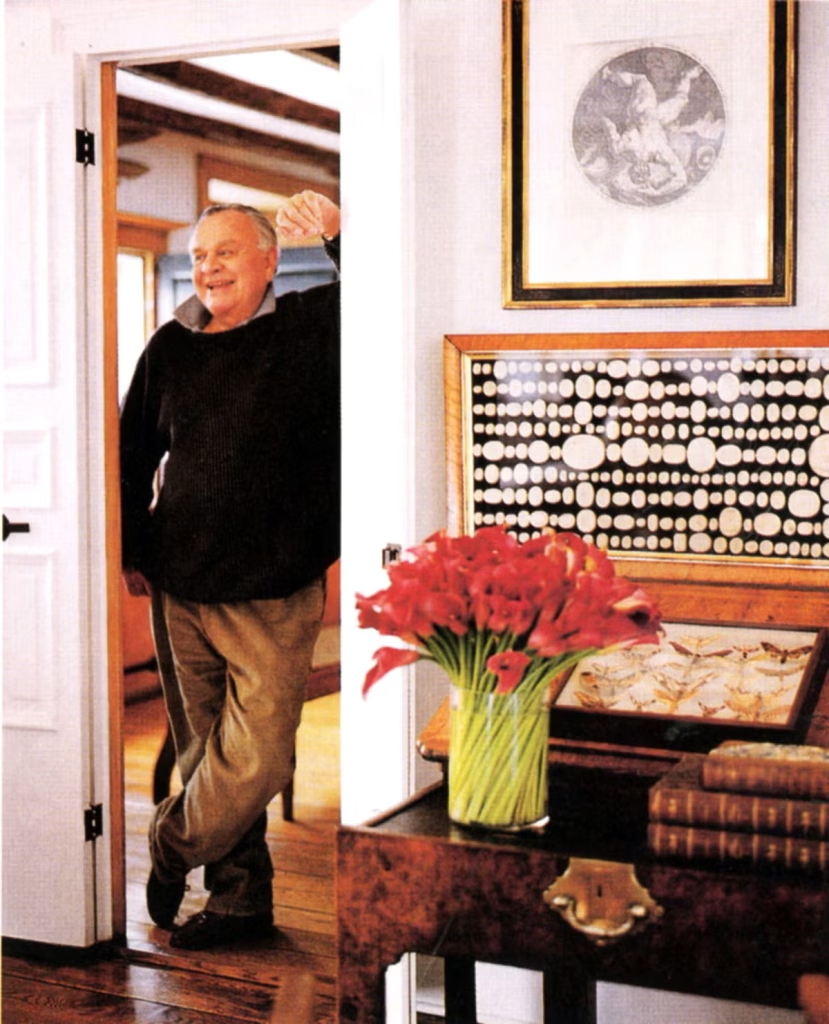
“The old boy’s shedding,” Bill Blass says, fondly stroking the head of Barnaby, his patently spoiled Labrador, as the dog’s golden fleece wafts down to the handsome broad floorboards of his Connecticut stone country house. The celebrated fashion designer has been doing quite a bit of shedding himself lately: a master of restraint in the decoration of both his city and country domicile, he has recently banished many of his possession, having come to regard them as superfluous to the simplicity he exults in.

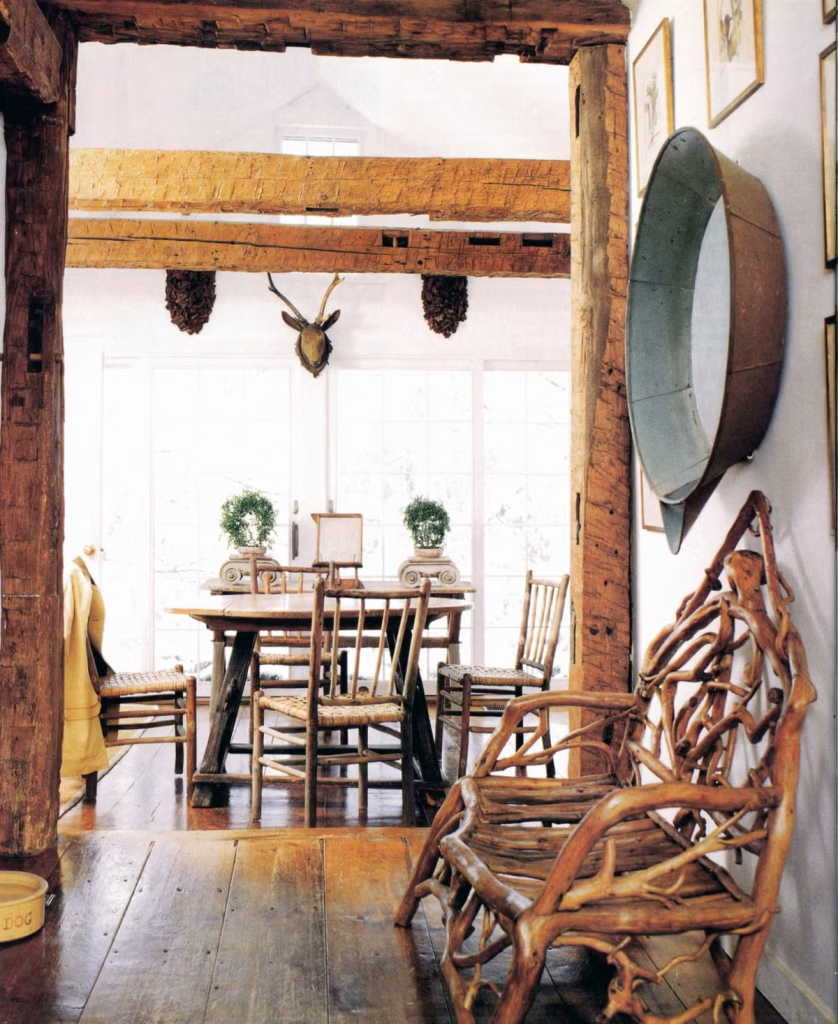
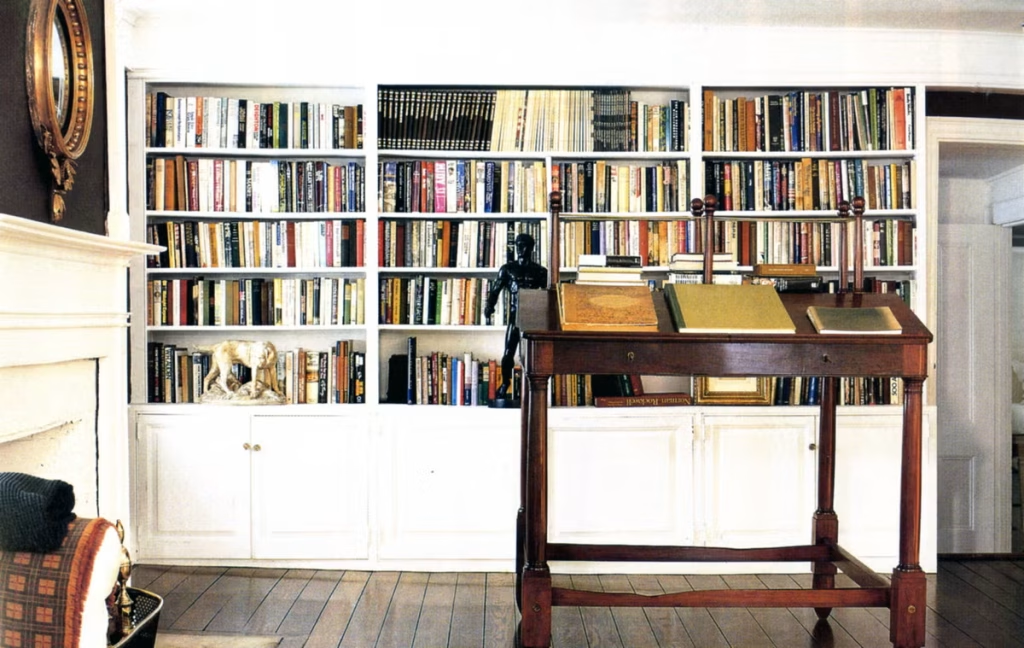
At once brash and charming, Blass—who, incidentally, refers to himself as “the old boy” —may best be described a jovially gruff. “It’s all about editing one’s life—refining, simplifying, constantly editing,” he says, casting an appraising eye around his splendidly austere drawing room, which is filled primarily with English and American antiques arranged with an unmistakably masculine assurance. “Mostly it’s a matter of eliminating. I’ve put away 37 pictures, some of them rather good. And having had gray walls, I decided to have them painted white. I’m definitely influenced by the way Swedish houses look. They’re quiet and refined.”

Ridding the walls of color inspired further paring. “Once they became white, I discovered that I preferred the cleanness of unadorned walls,” he says. “So I took down all the paintings and hung only prints and drawings. What’s remarkable is that white walls give these rooms a certain warmth, in both summer and winter.”
Most Scandinavian in feeling is the front hall, where a recently purchased Gustavian bed serves as a banquette. Here the floorboards have been stripped and rubbed with white paint, giving the room an almost mythical glow. Also new is an 18th-century Belgian desk from the dealer Axel Vervoordt and a suite of 19th-century pastel drawings in gray and white by Walter Gay.
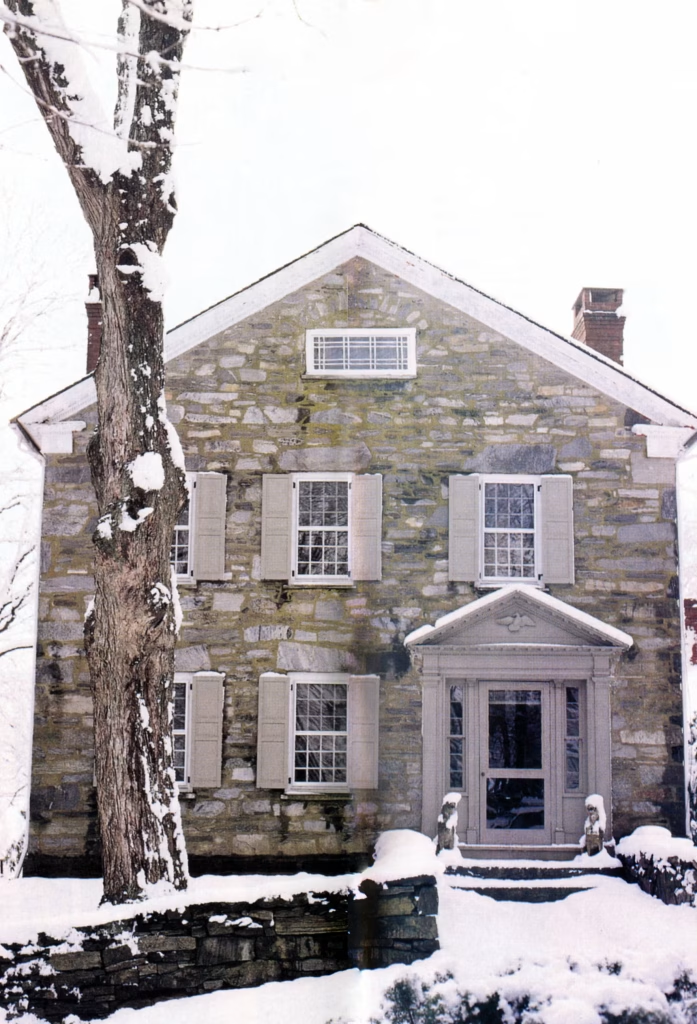
Photo by Fernando Bengoechea.
“Bill’s always had the best taste in the world,” declares Nancy Kissinger, a close friend, “but now I think the house is perfect. It’s become fulfilled in a way—you can tell it’s the home of someone who loves it and cares about its integrity. It’s spare but complete, without the kind of spareness that looks starved.”
Built in 1770, the house was originally a tavern on the old Albany Post Road, where General Washington is said to have conferred with French generals. Blass recalls seeing it for the first time 20 years ago while staying with the late Slim Keith and Billy Baldwin. “I’d been renting for years in Southampton,” he says, “but I’d come to realize that I find the country much more appealing than the beach.” Having been shown around by a realtor, he sought Baldwin’s opinion. “Billy said, ‘It’s a great house. Get it,’” he recalls.

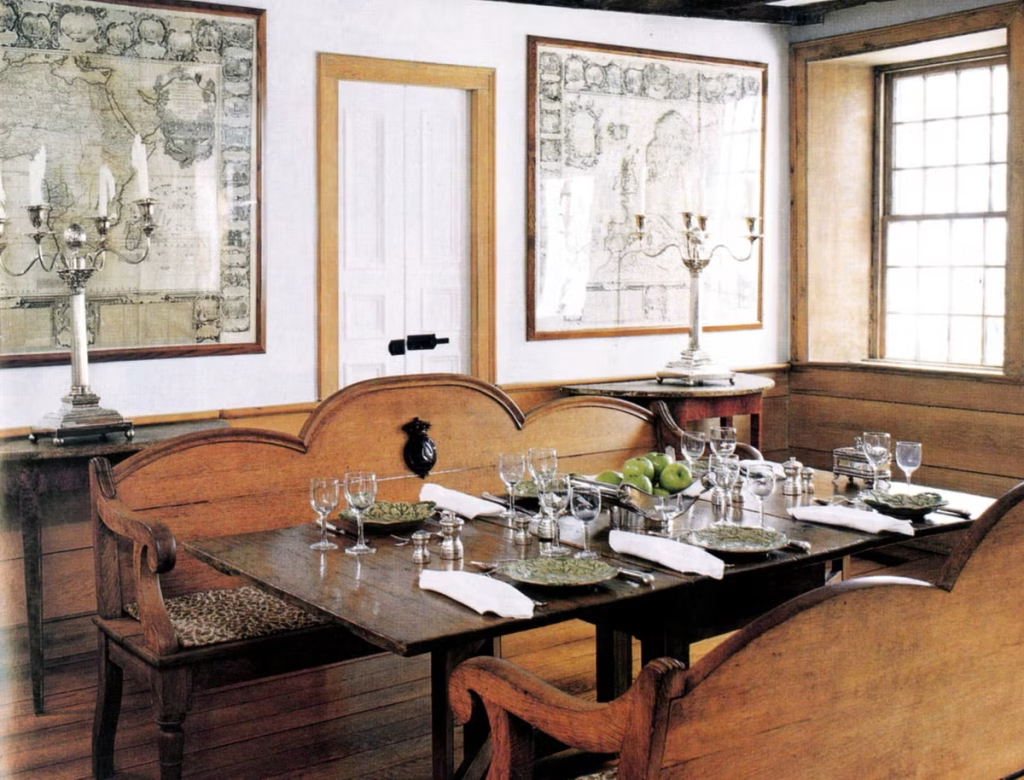
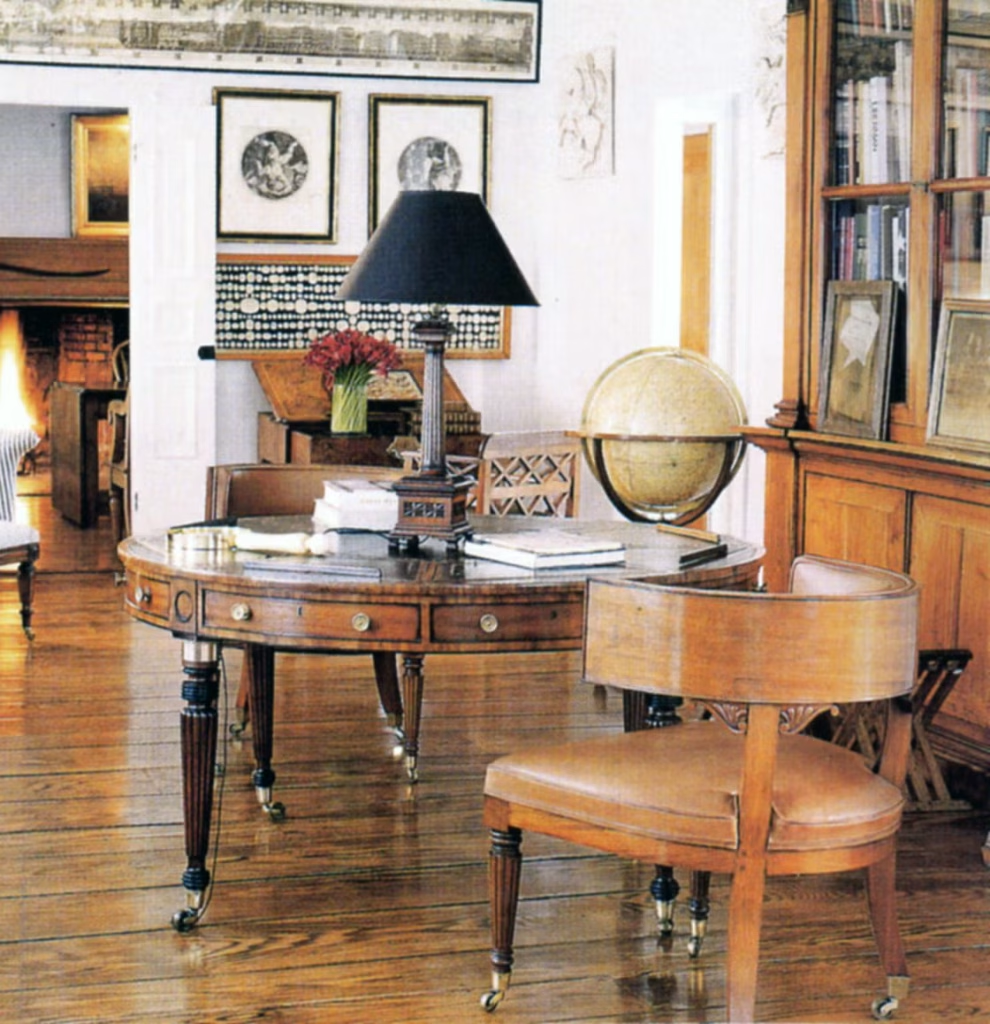
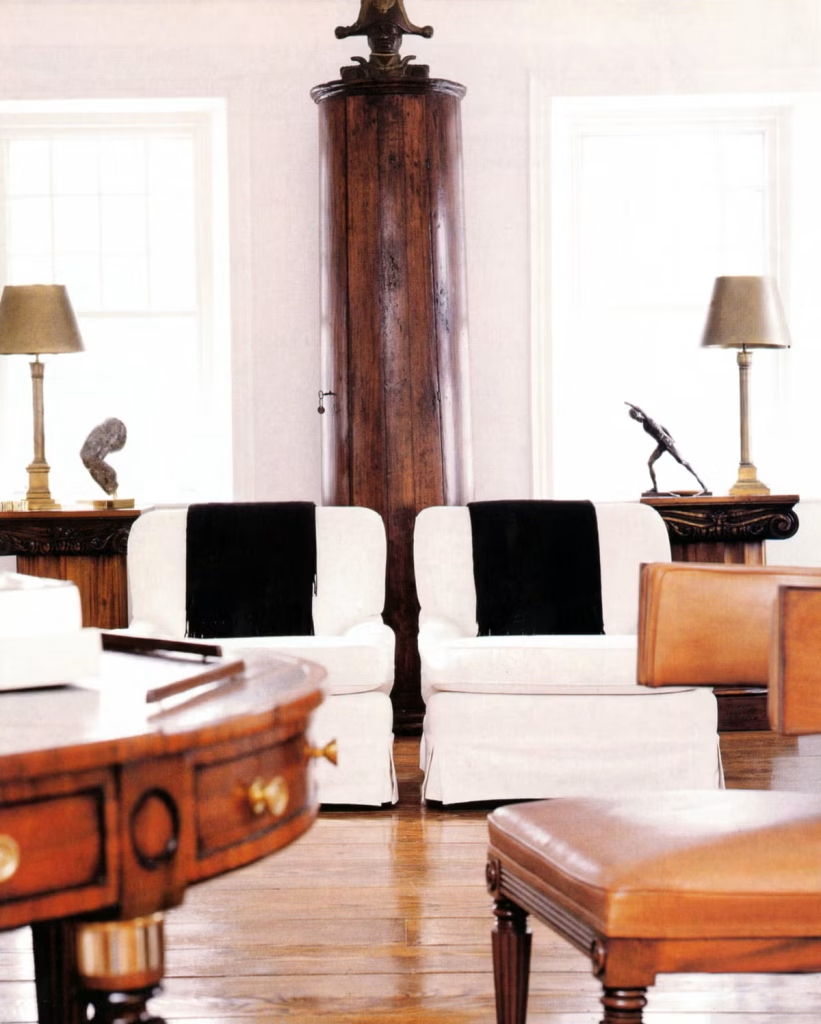


Blass talks about the legendary decorator with affection. “Everything I do is influenced by him,” he says, “which comes from knowing him for 25 years. There was always a sense of neatness about his interiors, even when he decorated for the very rich. I’ve always had enormous admiration for people like Billy who know how to live well, who accomplish that rare thing of creating houses that perfectly reflect their personality and character.”
Blass also praises Chessy Rayner, a partner in the decorating firm MAC II, who worked with him on the house and helped him with his superbly elegant apartment on New York’s Sutton Place. “She’s the best,” he says. “We have a very similar wavelength, but we can never second-guess each other.”
Blass enjoys the house so much that he is reluctant to ever leave it. “I never go anywhere if I can help it,” he says, admitting that weekends away from his fashion licensing business in Manhattan now tend to stretch from Thursday to Monday.
“Bill prefers the company of his dog to anybody else,” says John Richardson, the Picasso biographer and a country neighbor. “People who know him well don’t bother him too much because they realize he’s happiest being there alone with the dog. He’s a happy recluse, which is surprising because he’s so genial.”
Richardson notes that collecting objects and rearranging the house seem to give Blass ceaseless joy, which explains why the designer makes several buying trip to London each year. “The second he hits Pimlico Road, every dealer on the street knows he’s there,” says Nina Griscom, another close friend. “It’s wonderful to watch him because he’s got such a hawk eye. He’s quick and never waffles. He shops like a man.”
Carleton Hobbs, one of London’s leading dealers, agrees, confessing that he covets Blass’s remarkable collection and taste. “Bill has one of the finest eyes I’ve ever known,” he says. “Believe me, I’m very relieved that he’s never wanted to be a dealer.”
This article originally appeared in the April/May 1997 issue of ELLE DECOR.